How to Improve Your Credit Score for Loans: How To Improve Credit Score For Loans
How to improve credit score for loans – Improving your credit score is a crucial step towards securing favorable loan terms and interest rates. A strong credit score can open doors to various financial opportunities, making it essential to understand how to manage and enhance your credit profile effectively. In this article, we will explore several key aspects of credit scores and provide actionable strategies to help you improve your creditworthiness.
Understanding Credit Scores
A credit score is a numerical representation of your creditworthiness, typically ranging from 300 to 850. Lenders use this score to evaluate the risk of lending you money or extending credit. A higher score indicates lower risk, while a lower score suggests potential issues. Several factors influence credit scores, including:
- Payment History: Timely payments are the most significant factor, accounting for about 35% of your score.
- Credit Utilization: This ratio compares your current credit card balances to your total credit limits and accounts for 30% of your score.
- Length of Credit History: A longer credit history can positively impact your score, making up 15% of the total.
- Types of Credit: A mix of credit accounts (credit cards, installment loans) can contribute 10% to your score.
- New Credit: Opening numerous new accounts in a short time can negatively affect your score, accounting for 10% of it.
Different credit scoring models, such as FICO and VantageScore, may weigh these factors differently, but they generally follow similar principles.
Assessing Your Current Credit Score, How to improve credit score for loans
To improve your credit score, it’s important to start by assessing your current credit status. You can obtain a free credit report from the three major credit bureaus: Equifax, Experian, and TransUnion. The Fair Credit Reporting Act mandates that you are entitled to one free report annually from each bureau.Once you have your report, evaluate the accuracy of the information presented.
Look for discrepancies, such as incorrect personal information or unfamiliar accounts. Common errors in credit reports include:
- Missed payments that were made on time
- Accounts that do not belong to you
- Incorrect credit limits or balances
If you identify errors, you can dispute them with the credit bureau to have them corrected.
Effective Strategies to Improve Credit Scores
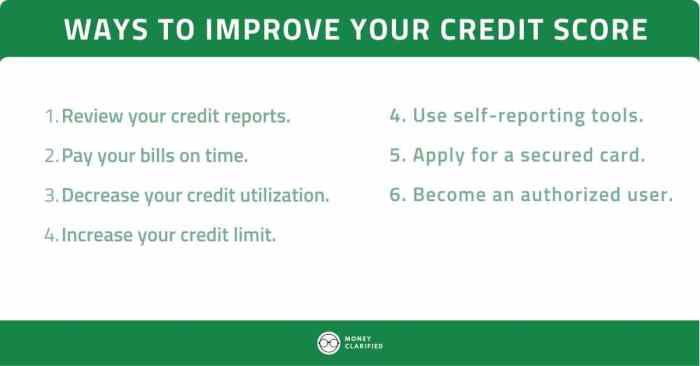
Improving your credit score requires a proactive approach. Here are some effective strategies to consider:
- Pay Off Outstanding Debts: Focus on paying down existing debts, particularly high-interest debts, to improve your score.
- Make Timely Payments: Consistently paying bills on time is crucial for maintaining a healthy credit score.
- Reduce Credit Utilization: Aim to keep your credit utilization ratio below 30% by paying down balances and avoiding new charges.
The impact of timely payments cannot be overstated; they not only prevent late fees but also contribute positively to your credit score.
Managing Credit Accounts Wisely
Managing existing credit accounts effectively is key to sustaining a good credit score. Here are important practices to follow:
- Maintain Old Credit Accounts: Keeping older accounts open can positively influence your credit history length.
- Avoid Frequent New Credit Applications: Regularly applying for new credit can lower your score due to hard inquiries.
- Use Credit Cards Responsibly: Only charge what you can afford to pay off each month to avoid accumulating debt.
Building Credit History
There are several ways to build your credit history, even if you are starting from scratch:
- Secured Credit Cards: These require a cash deposit as collateral but can help you establish credit.
- Authorized User Status: Becoming an authorized user on someone else’s credit card can help you benefit from their positive credit history.
- Using Rent and Utility Payments: Some services report these payments to credit bureaus, helping to build your credit profile.
Monitoring and Maintaining Credit Health
Regular monitoring of your credit is essential for maintaining your credit health. Consider utilizing credit monitoring services that alert you to significant changes in your credit report.
- Review Your Credit Regularly: Schedule periodic reviews of your credit report every few months.
- Know What to Look For: Check for any changes in payment history, credit inquiries, or new accounts.
- Maintain Good Habits: Continue practicing good credit habits, such as timely payments and prudent credit use.
Impact of Credit Scores on Loan Options
Your credit score significantly affects your loan options. A higher score can provide access to lower interest rates and more favorable loan terms. For those with lower credit scores, understanding available loan types is crucial:
- FHA Loans: These are often more accessible for borrowers with lower scores.
- Subprime Loans: These loans cater to those with less-than-perfect credit but often come with higher interest rates.
- Personal Loans: Some lenders offer personal loans for individuals with varying credit scores, though terms may vary.
Improving your credit score can enhance your chances of qualification for loans, even if your credit history is not ideal.