Definition of Average Business Loan Amount: What Is The Average Business Loan Amount
What is the average business loan amount – The average business loan amount refers to the typical sum of money that businesses apply for and receive when seeking financing. This metric holds significant importance in the lending landscape, as it provides insights into the funding needs of various businesses across different industries. Understanding the average loan amount can help lenders assess risk and tailor their offerings to meet market demands.
For example, the average amount borrowed by a technology startup might be considerably higher than that of a local retail shop. Similarly, industries such as manufacturing or healthcare often see larger loan amounts due to their capital-intensive nature. Factors that influence the average business loan amount include the business’s operational size, financial health, and industry sector.
Types of Business Loans
Several types of business loans are available to entrepreneurs, each catering to different financial needs and situations. The average loan amounts associated with each type can vary significantly.
- Term Loans: Typically ranging from $10,000 to over $1 million, these loans are offered for a fixed term and are commonly used for long-term investments.
- Lines of Credit: Average amounts can range from $5,000 to $500,000, providing businesses with flexible access to funds for short-term needs.
- SBA Loans: These government-backed loans often range from $50,000 to $5 million, designed to support small businesses with favorable terms.
- Equipment Financing: Average amounts typically fall between $10,000 and $1 million, specifically for purchasing equipment.
- Invoice Financing: Businesses can receive around 80% to 90% of an invoice’s value, making the average amount highly variable.
| Loan Type | Average Loan Amount |
|---|---|
| Term Loans | $10,000 – $1 million |
| Lines of Credit | $5,000 – $500,000 |
| SBA Loans | $50,000 – $5 million |
| Equipment Financing | $10,000 – $1 million |
| Invoice Financing | Variable |
Factors Affecting Loan Amounts
When determining the loan amounts they are willing to offer, lenders consider several key financial metrics. These factors play a crucial role in shaping the average business loan amount.
- Credit Scores: A higher credit score can significantly increase the likelihood of receiving larger loan amounts, as it indicates lower risk to lenders.
- Business Revenue: Consistent and higher revenue can qualify a business for larger loans, showcasing its ability to repay.
- Debt-to-Income Ratio: This ratio helps lenders assess the business’s existing debt obligations in relation to its income, influencing the maximum allowable loan amount.
- Business Plans and Projections: A well-prepared business plan with solid projections can convince lenders to approve higher amounts based on future growth potential.
Average Loan Amount by Business Size
The average business loan amount varies significantly based on the size of the business. Smaller businesses often require less funding than medium or large enterprises.
- Small Businesses: Average loan amounts typically range from $10,000 to $100,000.
- Medium Businesses: The average loan amounts can be between $100,000 and $500,000.
- Large Businesses: Corporations often seek loans that exceed $500,000 and can reach several million dollars.
Geographic Variations in Loan Amounts
Average business loan amounts can also differ widely depending on geographic location. Regional economic conditions, market demand, and local business dynamics play vital roles in this variation.
- Urban Areas: Businesses in metropolitan regions often access higher average loan amounts due to greater economic activity and competition.
- Rural Areas: In contrast, businesses in rural regions generally see lower average loan amounts, often reflecting limited market opportunities.
- International Variations: Different countries exhibit significant disparities in average loan amounts, influenced by local regulations, economic stability, and lending practices.
Trends in Business Loan Amounts
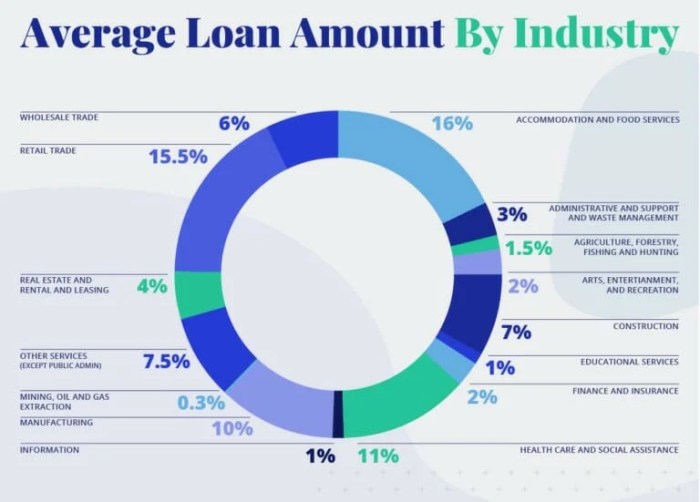
Recent years have seen shifting trends impacting the average business loan amount. Factors such as economic fluctuations, changes in interest rates, and market demands influence these trends.
| Year | Average Loan Amount |
|---|---|
| 2013 | $150,000 |
| 2015 | $175,000 |
| 2018 | $200,000 |
| 2020 | $225,000 |
| 2022 | $250,000 |
Application Process for Business Loans, What is the average business loan amount
Applying for a business loan involves a systematic process to ensure that applicants meet average expectations for loan amounts.
- Assess Financial Needs: Determine the required amount and purpose of the loan.
- Gather Documentation: Collect necessary documents such as tax returns, financial statements, and business plans.
- Check Credit Score: Review your credit report to understand how it may impact your loan eligibility.
- Choose the Right Lender: Research various lenders to find one that aligns with your loan amount needs.
- Submit Application: Complete and submit the loan application along with all required documents.
Impact of Interest Rates on Loan Amounts
Interest rates significantly influence the average business loan amount. Higher rates can lead to reduced loan eligibility and amounts.
- Rising Interest Rates: Businesses may face higher costs of borrowing, which can result in lower average loan amounts being approved.
- Lower Interest Rates: Conversely, reduced rates encourage borrowing, often leading to higher average loan amounts.
| Interest Rate | Average Loan Amount |
|---|---|
| 5% | $200,000 |
| 7% | $175,000 |
| 10% | $150,000 |
Real-life Examples of Average Business Loans
Examining real-life case studies can shed light on how businesses secure average loan amounts.
- A retail store obtained a loan of $75,000 to expand its inventory, resulting in a 30% increase in sales.
- A technology startup secured $250,000 to develop its product, leading to partnerships with major clients.
- A restaurant utilized a $150,000 business loan to renovate its space, which boosted customer traffic by 40%.